
Reflection questions for students are purposeful prompts that guide learners to think carefully about their experiences, understanding, and progress.
This guide explains their value, offers practical examples, and highlights how reflection aligns with our educational approach at UNIS Hanoi.
What Are Reflection Questions for Students?
Reflection questions for students are structured prompts that encourage learners to think carefully about what they have learned, how they learned it, and why it matters. Rather than focusing only on outcomes, these questions help students examine their thinking processes and learning habits.
Key benefits include:
- Cognitive development: improved retention, deeper understanding, and stronger problem-solving skills.
- Metacognition: students learn to plan, monitor, and evaluate their own learning.
- Emotional growth: increased confidence, resilience, and reduced learning-related stress.
At UNIS Hanoi, reflection is a core element of the IB approach. Reflective practices support inquiry-based learning and help students become self-aware, independent learners who can articulate their thinking clearly.
Practical Reflection Questions for Different Scenarios
Reflection questions for students can be adapted to many learning contexts. Used consistently, they help learners make sense of experiences and develop responsibility for their own growth.
Classroom Lessons
Reflection after lessons helps students consolidate understanding and identify gaps. By articulating learning outcomes and challenges, students strengthen metacognitive awareness, which supports long-term learning.

Example Reflection Questions
- “What was the most important idea you learned today, and why?”
- “Which part of today’s lesson challenged you the most?”
- “How does today’s learning connect to something you already knew?”
- “If you had to teach this lesson to someone else, what would you include?”
At UNIS Hanoi, reflective questioning is embedded in IB inquiry-based lessons. Students are encouraged to explain their thinking, supporting the development of Thinkers and Inquirers within the IB learner profile.
Homework & Study Reflection
Reflecting on homework enables students to evaluate their study habits and learning strategies. This process builds independence and helps parents support learning at home in a constructive way.
Example Reflection Questions
- “Which task was easiest for you, and why?”
- “What strategy helped you complete this work successfully?”
- “What would you do differently next time?”
- “Did you ask for help when you needed it?”
Independent reflection aligns with UNIS Hanoi’s emphasis on student agency and self-directed learning. Across all IB programmes, students use reflection journals and portfolios to monitor progress and set goals.
Project & Group Work Reflection
Group reflection develops collaboration, accountability, and empathy. Students become more aware of their contributions and the dynamics that influence group success.

Example Reflection Questions
- “How did our group divide responsibilities?”
- “What did I contribute well to the team?”
- “What challenges did our group face, and how did we solve them?”
- “How could our collaboration improve next time?”
Collaborative reflection is common at UNIS Hanoi in project-based learning, Service Learning, and interdisciplinary IB units. These practices support the growth of Communicators and Caring learners.
Personal Reflection
Personal reflection supports emotional awareness, motivation, and resilience. It helps students recognise progress and develop a growth mindset.
Example Reflection Questions
- “How did I feel about my learning today?”
- “What achievement am I most proud of this week?”
- “What is one challenge I am working to overcome?”
- “What goal would I like to set for myself next?”
Student well-being is central at UNIS Hanoi. Reflection is integrated into pastoral care, advisory programmes, and student-led conferences to support balanced academic, social, and emotional development.
How Teachers and Parents Can Use Reflection Questions
Teachers and parents play a vital role in helping students develop reflective habits. Effective reflection questions are open-ended and invite explanation, rather than prompting simple yes or no responses. Questions that begin with how, why, or what did you notice encourage deeper thinking and meaningful discussion.
Reflection can be integrated naturally into daily routines at school and at home. When used consistently, it becomes a normal and valuable part of the learning process rather than an additional task.

Practical ways to use reflection questions include:
- Encouraging students to keep reflection journals or learning logs
- Holding short reflection discussions after lessons or homework
- Using reflection to support goal-setting and self-assessment
At UNIS Hanoi, reflection aligns closely with IB learner profile attributes such as Thinkers, Communicators, and Reflective learners.
For parents, reflection questions can be asked after homework, during family conversations, or following parent–teacher conferences. The goal is not to evaluate performance, but to help children articulate learning experiences and set realistic goals.
Why Reflection Is Core to Learning at UNIS Hanoi
At UNIS Hanoi, reflection is a foundational element of teaching and learning across the school. It is intentionally embedded within the International Baccalaureate framework to help students understand not only what they are learning, but how and why they learn. Through regular reflection, students become active participants in their own educational journey.

Reflection is systematically integrated across all IB programmes at UNIS Hanoi, including the Primary Years Programme (PYP), Middle Years Programme (MYP), and Diploma Programme (DP).
At each stage, reflective practices are developmentally appropriate and increasingly sophisticated, ensuring continuity and depth of learning. This approach supports our mission to develop lifelong learners and globally minded individuals who can think critically and act responsibly.
Reflection also plays a central role in Service Learning at UNIS Hanoi. Students are guided to move beyond participation and towards meaningful understanding by reflecting on their experiences. Through structured reflection, students are able to:
- Understand genuine community needs
- Evaluate the impact of their actions on others
- Connect service experiences to global issues and the Sustainable Development Goals
These reflective processes help students transform action into insight and responsibility.

Strong reflective practices further strengthen the partnership between home and school. Reflection provides a shared language for discussing learning, progress, and personal growth. Parents can support this process by:
- Asking open-ended questions after school or learning activities
- Encouraging goal-setting and self-evaluation conversations
- Reviewing student reflections during conferences and learning reviews
By embedding reflection at every level, UNIS Hanoi ensures that students develop the habits of mind necessary for academic success, personal well-being, and lifelong learning.
Start a Reflective Journey With Your Child at UNIS Hanoi
Reflective practice is a skill that supports academic success, emotional well-being, and lifelong learning. Reflection questions for students help transform everyday experiences into meaningful understanding.
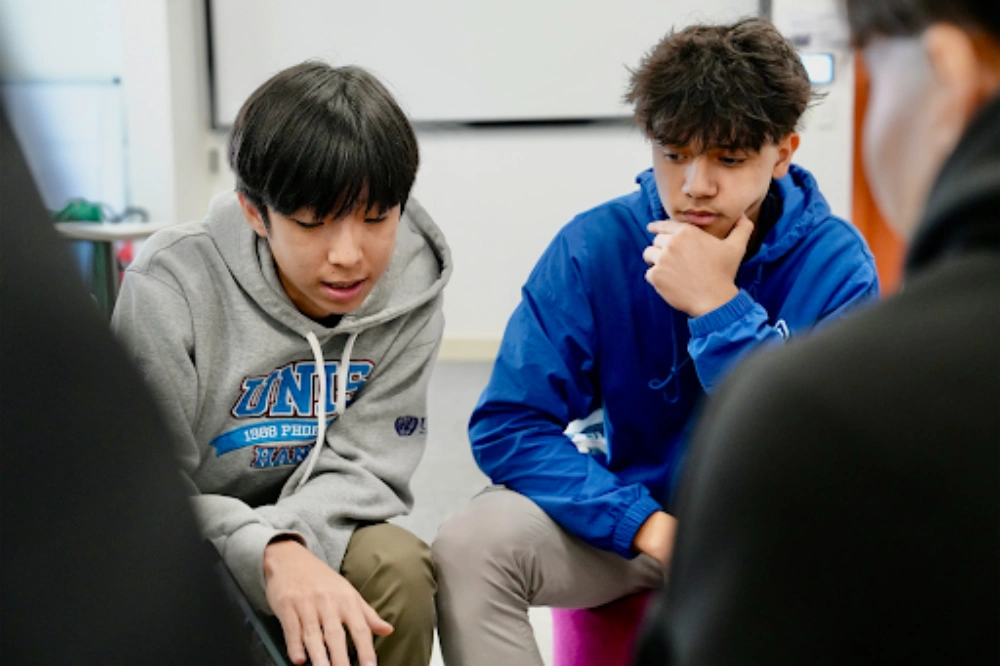
We encourage families to apply these practices at home and in school, and to consider UNIS Hanoi as a community committed to reflective, globally minded education.
FAQs
The following answers address common concerns and support effective use of reflection questions for students at home and school.
1. At what age can students start using reflection questions?
Students can begin simple reflection from early childhood, using age-appropriate language and guidance.
2. How often should reflection questions be used?
Short, regular reflection is more effective than infrequent, lengthy discussions.
3. Should parents correct children’s answers during reflection?
Reflection is most effective when students feel safe to express ideas. Parents should listen and guide rather than correct.
4. Can reflection help students who struggle academically?
Yes, reflection helps students identify challenges and strategies, supporting personalised improvement and confidence.
Author Profile

- UNIS Hanoi is ever-evolving, but one thing that remains is our passion to nurture and equip students to be agents of change for a better world.
Latest entries
 UNIS Hanoi Address1 Jan 2026Reflection Questions for Students: A Practical Guide to Deeper Learning
 Calendar, News and Publications14 Dec 2025UNIS Hanoi: Leading the Way in Multicultural Environmental Education
 Calendar, News and Publications30 Oct 2025What is an IB School? A Complete Guide for Parents
 Calendar, News and Publications29 Oct 2025School Tour at UNIS Hanoi – A Comprehensive Guide for Parents